
Sensory Wall Activities Equipment
LEGO Walls
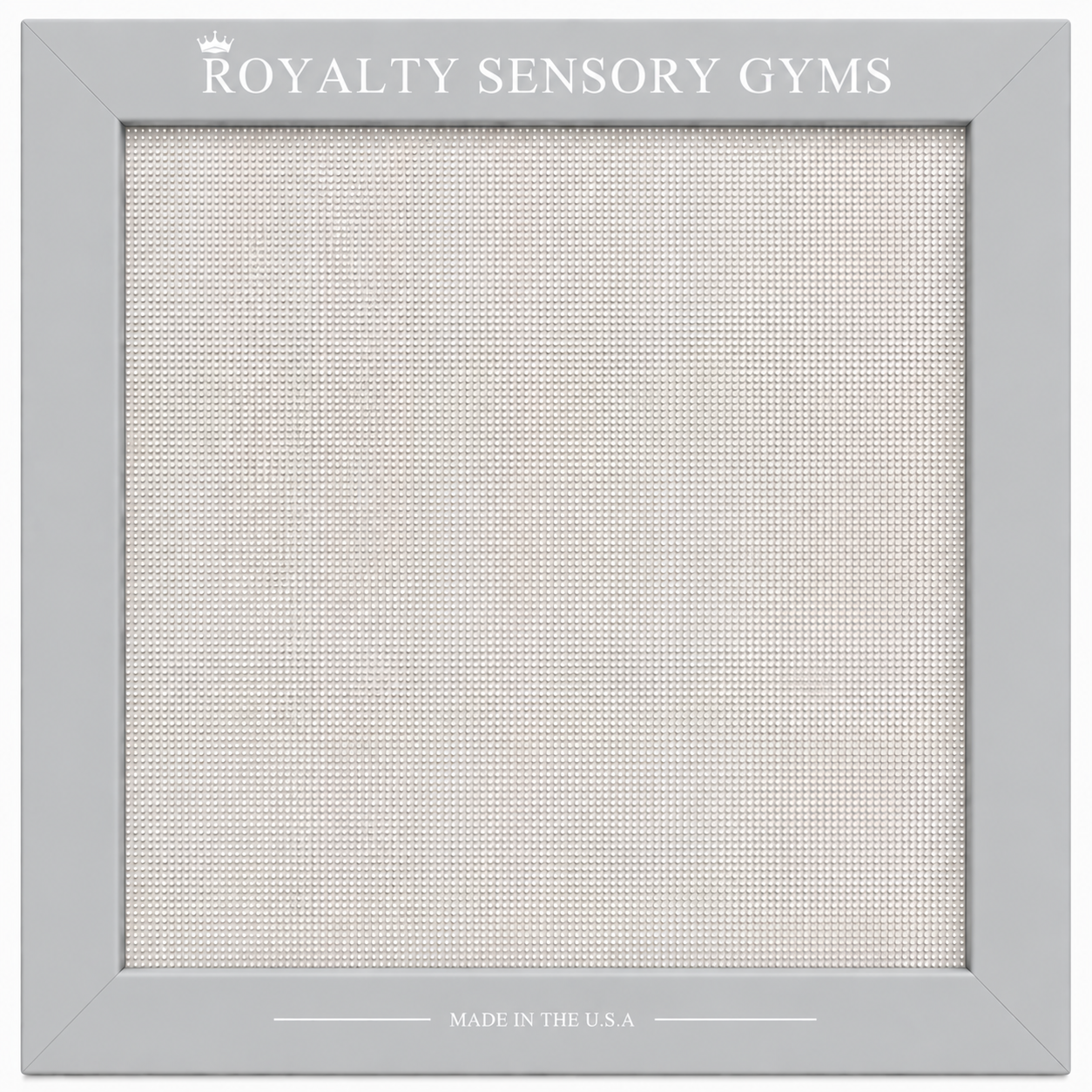
Custom LEGO walls transform an open wall into an interactive building surface where users can create pictures, patterns, words, structures, and collaborative designs using compatible interlocking building bricks.
A typical installation may use a large wall-mounted baseplate system, including configurations approximately 4 feet by 8 feet when room dimensions allow. Smaller, wider, taller, or multi-panel arrangements can also be considered according to the available wall space and intended use.
During supervised activities, the wall can support creative building, visual planning, pattern recognition, sorting, sequencing, fine-motor movement, hand-eye coordination, spatial reasoning, and problem-solving. Users can work independently or contribute to a shared design.
Group building activities can also encourage communication, cooperation, turn-taking, shared planning, and teamwork. Facilitators can create structured challenges involving colors, shapes, letters, numbers, matching, storytelling, or completing a design from a visual example.
The panel height can be selected to provide comfortable access for the intended users. Larger installations may include building areas at several heights so users can participate while standing, sitting, or working from an accessible position.
Panel dimensions, mounting height, baseplate colors, surrounding trim, storage options, and decorative details can be customized to complement the room. The finished wall may coordinate with organizational branding, school colors, an existing sensory-room design, or a broader visual theme.
LEGO walls can be installed as standalone activities or combined with other interactive sensory wall activities, including tactile panels, puzzles, mirrors, gear walls, magnetic activities, drawing surfaces, and fine-motor features.
The wall may also be incorporated into a larger room containing climbing equipment, swings, movement structures, padded flooring, or selected sensory equipment and activity features. This gives users a quieter tabletop-style activity between more active movement experiences.
Custom building walls can be included in complete commercial sensory gyms for therapy clinics, schools, healthcare facilities, nonprofits, and community spaces. They may also be designed for home sensory rooms with suitable wall space.
During our consultation, design, manufacturing, and installation process, we evaluate wall dimensions, mounting height, panel configuration, user access, surrounding clearance, storage needs, nearby equipment, colors, and the wall construction required to support the completed installation.
Mirror Walls
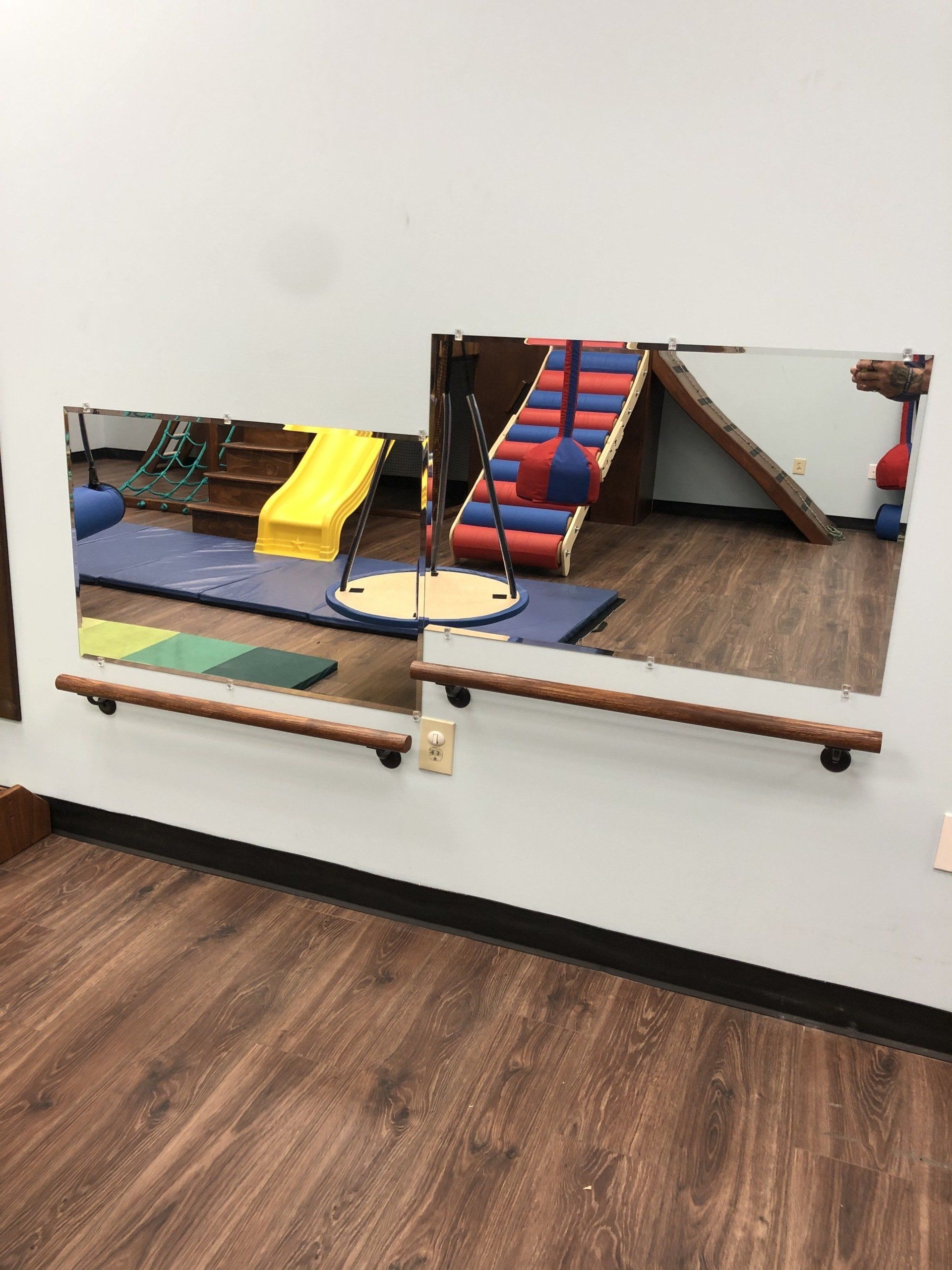
Custom sensory mirror walls create an engaging visual activity area where users can observe their movements, facial expressions, posture, and interactions with the surrounding room. Mirrors can be installed as standalone wall features or incorporated into a larger sensory-gym layout.
During supervised activities, mirrors can support visual attention, self-recognition, body awareness, imitation, facial-expression activities, movement observation, and coordination. Users can watch themselves reach, step, stretch, balance, dance, or complete guided movement sequences.
A mirror wall can also provide immediate visual feedback during activities involving balance, posture, bilateral movement, motor planning, or modeled actions. A therapist, teacher, caregiver, or activity leader can demonstrate a movement while the user observes and follows along.
Mirror dimensions, mounting height, orientation, framing, placement, and surrounding padding can be customized around the room and intended users. Options may include a single large mirror, several coordinated panels, a horizontal arrangement, or mirrors positioned at multiple viewing heights.
Mirrors can be paired with other interactive sensory wall activities, including tactile panels, building walls, puzzles, magnetic activities, drawing surfaces, gears, and fine-motor features.
A mirror wall may also be positioned near padded stairs, climbing ramps, slides, balance features, swings, or selected sensory equipment and activity features. This allows users to observe their movements while participating in active or stationary activities.
Custom mirror walls can be incorporated into complete commercial sensory gyms for therapy clinics, schools, healthcare facilities, nonprofits, and community spaces. They may also be designed for home sensory rooms with suitable wall space.
During our consultation, design, manufacturing, and installation process, we evaluate wall dimensions, mounting height, viewing angles, intended users, surrounding equipment, traffic flow, framing, wall construction, and the clear space required around the completed installation.
Sensory Tube Walls
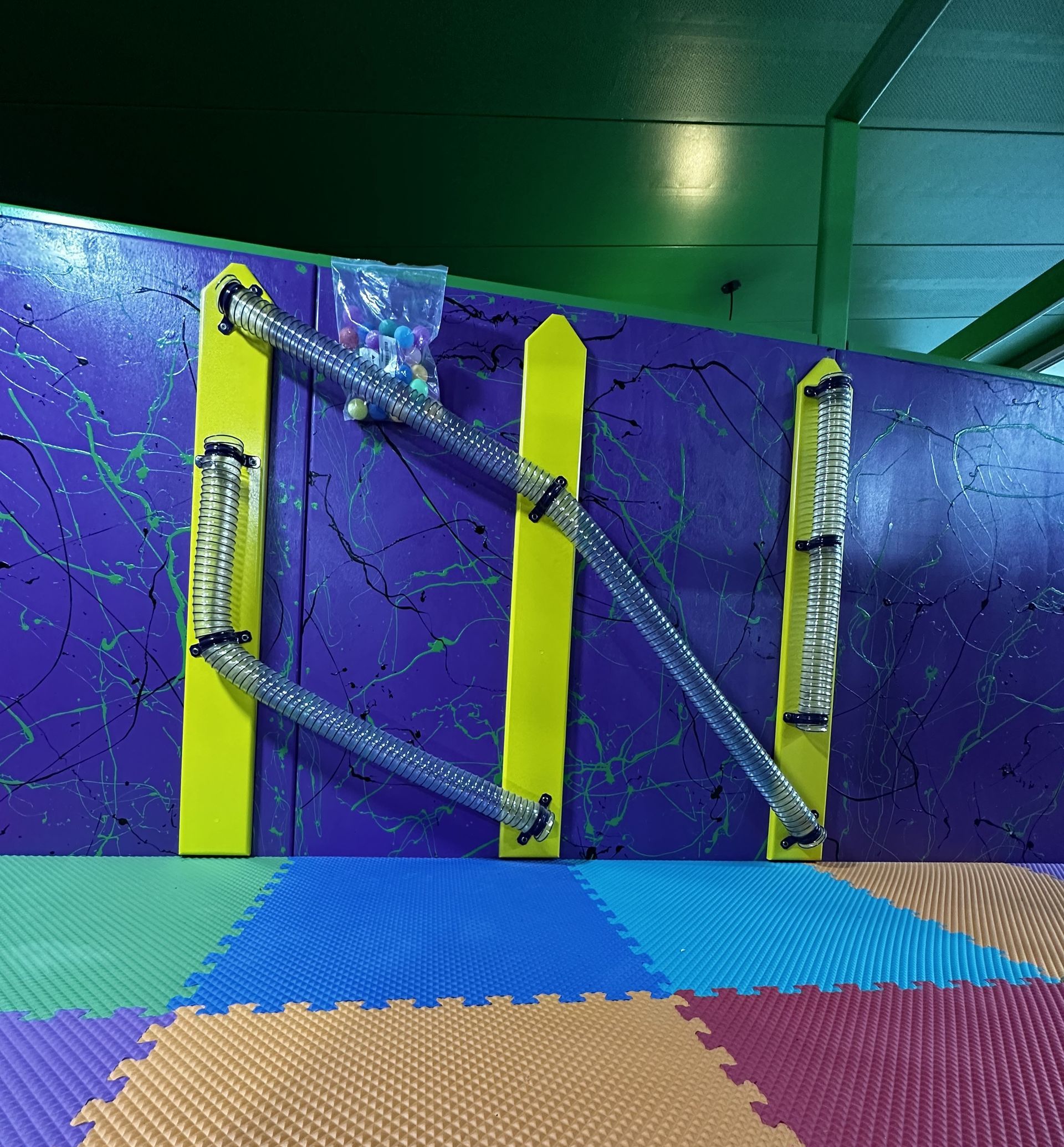
Sensory tube walls turn a simple ball path into an interactive visual and hands-on activity. Users place a ball into the starting point, watch it travel through clear tubing, and follow its movement as it passes through turns, drops, connectors, and different sections of the wall.
The transparent tubing allows users to visually track the ball from beginning to end. When a ball slows or stops, the user can identify its location and determine whether another ball, a gentle tap, or a change in the route is needed to help it continue.
During supervised activities, sensory tube walls can support visual tracking, hand-eye coordination, reaching, grasping, color recognition, sequencing, attention, cause-and-effect learning, and problem-solving. Users can predict where the ball will travel, compare routes, or take turns operating different sections.
Color-coordinated balls can be used for matching, sorting, counting, pattern activities, and guided instructions. A facilitator may ask a user to locate a specific color, predict the destination, complete a sequence, or compare the speed of balls moving through different routes.
Tube layouts can be customized with straight sections, curves, vertical drops, collection points, multiple starting positions, and more than one possible destination. The panel size, tubing pattern, mounting height, colors, and overall complexity can be adjusted for the intended users and available wall space.
Sensory tube walls can be installed as standalone activities or combined with other interactive sensory wall activities, including tactile panels, building walls, mirrors, puzzles, gears, magnetic activities, drawing surfaces, and fine-motor features.
The wall may also be incorporated into a larger room containing climbing structures, swings, padded flooring, quiet activity areas, or selected sensory equipment and activity features. This provides a stationary activity users can explore between more active movement experiences.
Custom sensory tube walls can be included in complete commercial sensory gyms for therapy clinics, schools, healthcare facilities, nonprofits, and community spaces. They may also be designed for home sensory rooms with suitable wall space.
During our consultation, design, manufacturing, and installation process, we evaluate wall dimensions, mounting height, tube configuration, ball size, user access, collection points, nearby equipment, wall construction, traffic flow, and the clear space required around the completed activity.
Pegboard Walls
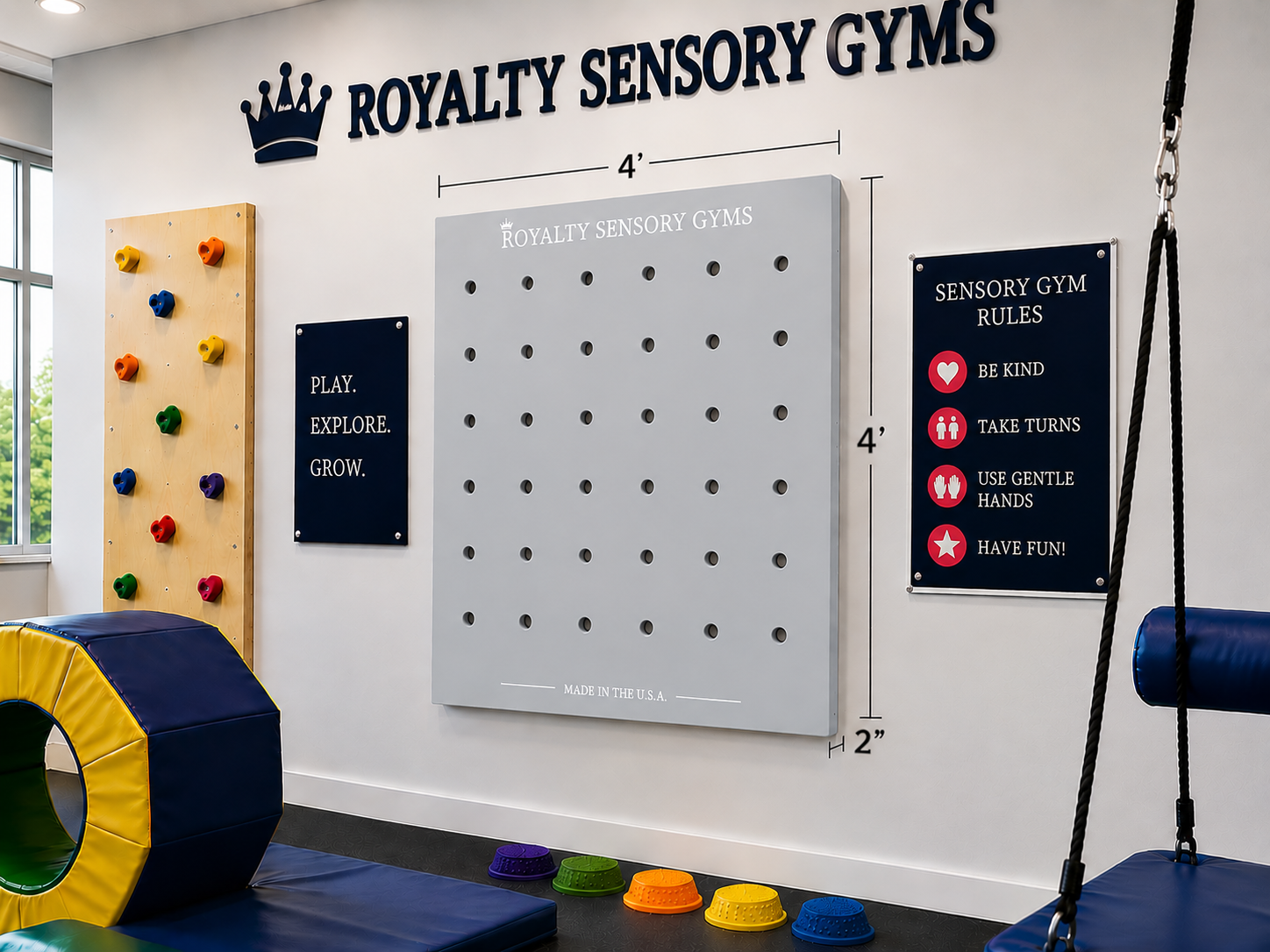
Custom pegboard walls create a flexible hands-on activity where users place, remove, arrange, and reposition colorful pegs across a structured wall panel. The activity can be adapted for open-ended exploration or guided exercises involving specific colors, patterns, positions, and movement sequences.
During supervised activities, pegboard walls can support reaching, grasping, hand-eye coordination, visual-motor integration, bilateral movement, color recognition, sequencing, spatial planning, and problem-solving. Users can select a peg, identify an opening, position it accurately, and repeat the process to complete a larger design.
Color-coordinated pegs can be used for matching, sorting, counting, pattern building, and following multi-step directions. Facilitators may create activities that ask users to copy a visual example, alternate colors, complete a shape, locate a specific position, or build a sequence from left to right.
Larger pegboard panels can also support standing activities involving reaching at different heights, moving across the wall, crossing the body’s midline, shifting weight, and using both hands together. The peg layout can be adjusted to create shorter or more extended movement sequences.
Pegboard walls may be installed vertically, horizontally, or as a multi-panel arrangement depending on the available wall space and intended users. Panel dimensions, mounting height, peg size, colors, spacing, storage, and surrounding trim can all be customized for the room.
Mounting the panel at an appropriate height can provide access for users who are standing, seated, or participating from another supported position. Larger installations may include activity areas at several heights so more than one user can participate at the same time.
Pegboard walls can be installed as standalone activities or combined with other interactive sensory wall activities, including light-up walls, building panels, mirrors, tactile activities, puzzles, gears, magnetic features, and drawing surfaces.
The wall may also be incorporated into a larger room containing climbing structures, swings, padded flooring, quiet activity areas, or selected sensory equipment and activity features. This provides a stationary hands-on activity between more active movement experiences.
Custom pegboard walls can be included in complete commercial sensory gyms for therapy clinics, schools, healthcare facilities, nonprofits, and community spaces. They may also be designed for home sensory rooms with suitable wall space.
During our consultation, design, manufacturing, and installation process, we evaluate panel size, orientation, mounting height, intended users, peg configuration, storage needs, wall construction, nearby equipment, traffic flow, and the clear space required around the completed activity.

Light Bright Wall
The Light Bright Wall is an interactive illuminated activity panel that combines hands-on building with immediate visual feedback. Users place translucent, multicolored pegs into the wall to create patterns, pictures, letters, numbers, and other designs.
When a peg is inserted into the illuminated panel, its color becomes more visible and creates an engaging visual effect. This immediate response can help maintain attention, encourage continued participation, and make it easier for users to see the results of each placement.
During supervised activities, the wall can support fine-motor movement, grasping, reaching, hand-eye coordination, visual-motor integration, color recognition, pattern creation, spatial planning, sequencing, and problem-solving.
Larger panels can also be used for activities involving bilateral coordination, standing balance, postural control, reaching across the body, and movement between different areas of the wall. Pegs may be placed at varying heights and distances to create different activity sequences.
Facilitators can create structured activities involving matching, sorting, counting, copying patterns, completing shapes, following color sequences, spelling words, or reproducing a design from a visual example. Users may also create freely without a predetermined pattern.
The wall can also support reciprocal and group activities. Two or more users may take turns adding pegs, contribute to a shared design, follow one another’s patterns, or work together to complete a larger picture.
Available panel sizes include approximately 2 feet by 2 feet, 2 feet by 4 feet, 4 feet by 4 feet, and 4 feet by 8 feet. The appropriate size and mounting height depend on the available wall space, intended users, viewing distance, surrounding equipment, and desired activity format.
The Light Bright Wall can be installed as a standalone feature or combined with other interactive sensory wall activities, including building walls, tactile panels, mirrors, magnetic activities, gears, puzzles, drawing surfaces, and fine-motor features.
It may also be incorporated into a larger room containing climbing structures, swings, padded flooring, quiet areas, or selected sensory equipment and activity features. This gives users an illuminated stationary activity between more active movement experiences.
Light-up peg walls can be included in complete commercial sensory gyms for therapy clinics, schools, healthcare facilities, nonprofits, and community spaces. They may also be designed for home sensory rooms with suitable wall space and electrical access.
During our consultation, design, manufacturing, and installation process, we evaluate panel size, mounting height, user access, viewing angles, wall construction, electrical requirements, nearby equipment, traffic flow, peg storage, and the clear space required around the completed installation.