How Much Does a Commercial Sensory Gym Cost?
A practical guide to pricing, equipment, installation, financing, and funding
Quick answer: Most professionally installed commercial sensory gyms cost between $14,000 and $16,000 . Final pricing depends on the size of the space, equipment selection, design complexity, location, travel, and installation requirements.
If you are planning a sensory gym for a therapy clinic, school, medical facility, or community organization, one of your first questions is probably: How much will it cost?
Every sensory gym is different. Royalty Sensory Gyms creates custom designs and quotes based on each organization’s space, goals, and budget. Here is what you should know before planning your project.
What Is the Average Cost of a Commercial Sensory Gym?
A typical professionally installed commercial sensory gym costs approximately $14,000 to $16,000 .
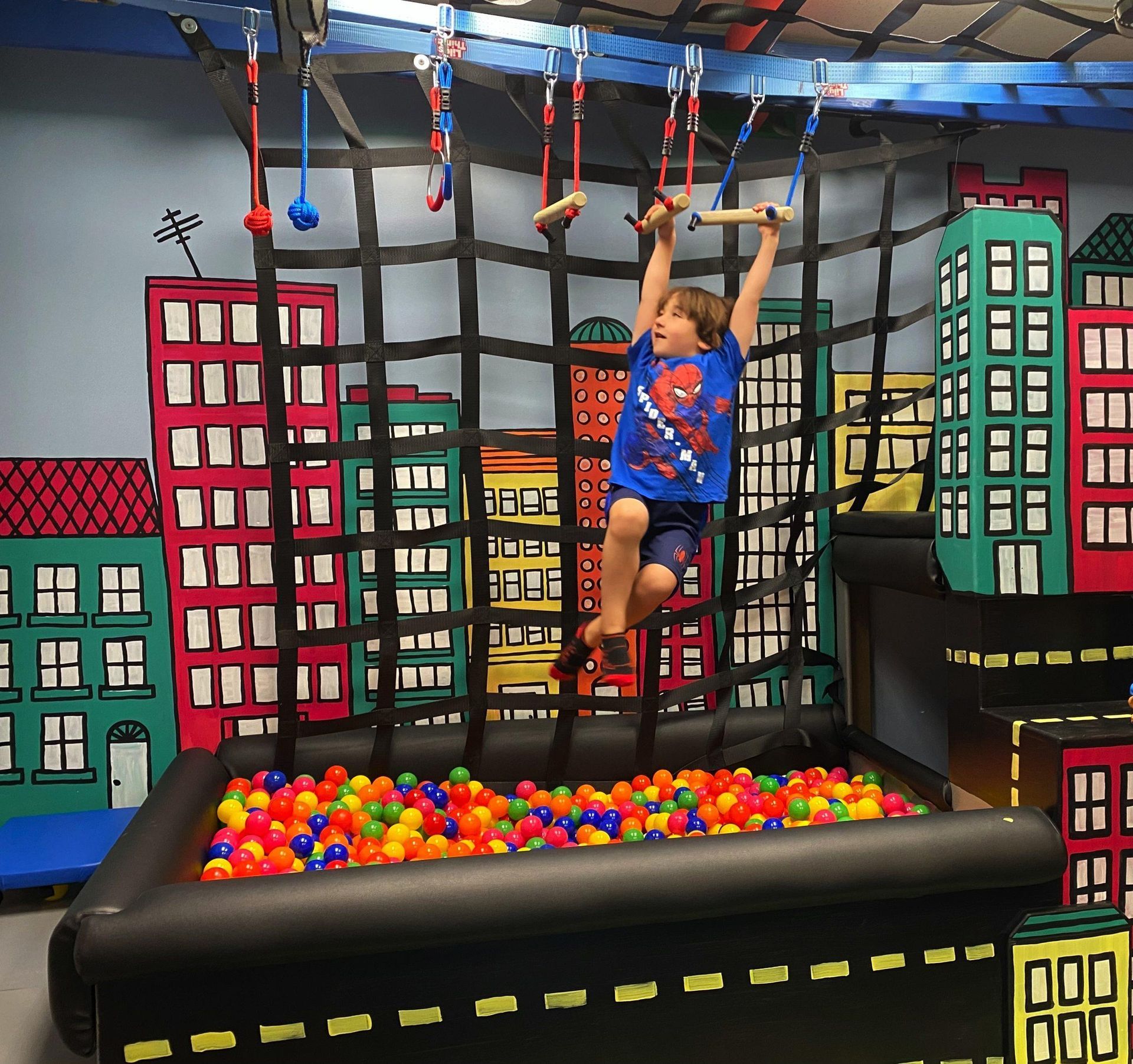
An average gym within this range may include:
- A monkey bar system
- A 4’x8’ custom play structure
- A 4’x8’ crash pit
- One rock wall
- Professional installation
This is not a fixed package or universal price. A smaller local project may cost less, while a larger gym with multiple climbing systems, custom features, or significant travel requirements may cost considerably more.
The best way to determine your actual sensory gym cost is to request a custom design and quote based on your available space.
Sensory Gym Cost Breakdown
The following ranges can help you understand what may be possible at different budget levels.
- Shipping a smaller gym/equipment: Starting around $4,000. A smaller equipment package without professional installation.
- Small local gym: Around $10,000. A limited build with fewer features and minimal travel costs.
- Average custom gym: $14,000 to $16,000. Monkey bar system, a play structure, a crash pit/ball pit, and possibly a rock wall.
- Large custom gym: $25,000 or more. Larger structures, multiple climbing areas, added features, and more complex installation.
These figures are general examples. The price of a specific gym will depend on its design, equipment, location, and installation requirements.
What Affects the Cost of a Sensory Gym?
Two sensory gyms with similar square footage can have very different prices. The biggest cost factors include travel/installation and your equipment selection.
Amount and Type of Equipment
A gym with one monkey bar system and a small play structure will generally cost less than a gym with multiple climbing systems, several rock walls, and a large crash pit.
The equipment that can affect your total investment includes:
- Monkey bar systems
- Free-Standing Swing Structures
- Custom play structures
- Crash pits/ball pits
- Rock walls
- Foam flooring
- Trampolines
- Wall games
The number, size, and complexity of these features all influence the final price.
Size and Complexity of the Design
A larger room does not automatically require an expensive gym, but larger and more ambitious designs typically require more materials, equipment, and installation time.
Custom features such as multiple levels, integrated climbing elements, slides, or enclosed spaces can also increase the cost. A thoughtful design should use your available space effectively without adding equipment simply to fill the room.
Shipping Versus Professional Installation
Some smaller sensory gyms can be shipped directly to the customer without on-site installation. These projects may cost less than $10,000, with some small shipped builds starting around $4,000.
Shipping-only options can reduce travel and labor expenses, but they may come with trade-offs. The gym will typically be smaller, and your organization may be responsible for assembly or coordinating installation.
A professionally installed gym costs more, but it provides additional support and allows for larger, more customized designs.
What Does a Typical Sensory Gym Include?
A sensory gym in the average $14,000 to $16,000 range may include a monkey bar system, play structure, crash pit/ball pit, and rock wall. Each piece can support different activities and goals.
Monkey Bar System
Monkey bar systems are often one of the best investments in a sensory gym. They can support climbing, hanging, swinging, coordination, upper-body movement, and a variety of therapist-led activities. Attachments and activities can also be changed over time, making the system useful for different children and therapy goals.
Play Structure
A custom play structure creates opportunities for climbing, crawling, imaginative play, and gross motor activity. Depending on its design, the space beneath the structure can also provide a quieter, more secluded area when a child needs a break from the larger gym environment.
Crash/Ball Pits
Crash pits provide a designated space for jumping, landing, climbing, and active movement. They can be incorporated alongside monkey bars, rock walls, or play structures.
Rock Wall
A rock wall adds climbing and problem-solving opportunities while helping facilities make use of vertical wall space. The wall’s size, shape, and difficulty can be customized for the intended age group and environment.
Can You Build a Sensory Gym for Less Than $10,000?
Yes. It is possible to create a sensory gym for less than $10,000.
The most realistic options within this budget are:
- A smaller gym installed near Royalty Sensory Gyms
- A shipped equipment package without on-site installation
- A design focused on one or two high-priority systems
- A project with fewer custom features
Some small shipping-only projects can cost as little as approximately $4,000.
The trade-off is usually scale. A lower-cost gym may include fewer pieces of equipment, less customization, or limited installation support. Starting with a clear list of priorities can help you spend your budget on the equipment that will receive the most use.
What Sensory Gym Equipment Provides the Best Value?
Monkey bar systems and play structures generally provide some of the best value because they support a wide range of activities and can become the central features of the gym.
A well-designed monkey bar system can accommodate different attachments and activities. A play structure can combine climbing, crawling, movement, imaginative play, and quieter areas within a single footprint.
There are not many truly inexpensive pieces of commercial sensory gym equipment that create the same level of impact as a core system. Instead of spreading your budget across numerous small items, it may be more effective to invest in one or two versatile features and build the rest of the gym around them.
Are Financing and Payment Plans Available?
Royalty Sensory Gyms offers 0% financing with payment plans ranging from four to 12 months.
A typical arrangement includes:
- Half of the project cost paid upfront
- The remaining half financed at 0%
- A repayment period of four to 12 months
Financing can help organizations move forward with a more complete design instead of removing important equipment because the entire project cannot be paid for at once.
Terms may depend on the project, so financing options should be discussed during the quoting process.
Can Grants Pay for a Sensory Gym?
Grants, loans, and other third-party funding may be available for sensory gym projects. Eligibility and application requirements vary by funding organization.
Most funders will request a formal quote and design before deciding whether to approve a project. Royalty Sensory Gyms can provide these materials so you have a clear scope and budget to include with your application.
In some situations, a grant or loan may cover only part of the requested amount. A payment plan may help bridge that gap, allowing you to preserve more of the original design instead of significantly reducing the project.
You should confirm allowable expenses and approval requirements directly with the organization providing the funding.
How to Save Money on a Sensory Gym
One of the best ways to control sensory gym costs is to plan the complete space before purchasing equipment.
- Request a full design and quote before applying for funding.
- Prioritize versatile equipment such as monkey bars and play structures.
- Combine equipment into one installation when possible.
- Avoid repeated travel and installation fees for multiple small projects.
- Consider a shipping-only option for a smaller gym.
- Use financing to spread out payments instead of reducing the gym’s most valuable features.
Building a gym in several separate phases may feel more affordable at first. However, repeated travel and installation expenses can make the total project more expensive. When the budget allows, completing more of the build during one installation may provide better long-term value.
Frequently Asked Questions About Sensory Gym Costs
How much does a commercial sensory gym cost?
Most professionally installed commercial sensory gyms cost approximately $14,000 to $16,000. Smaller or larger custom projects may fall outside this range.
Can a sensory gym cost less than $10,000?
Yes. Smaller local projects and shipped sensory gym kits can cost less than $10,000. Some small shipping-only builds may start around $4,000.
What increases the cost of a sensory gym the most?
Travel and installation are often the biggest variables. The amount, size, and complexity of the equipment also have a significant effect on the final price.
Does Royalty Sensory Gyms offer financing?
Yes. Royalty Sensory Gyms offers 0% financing, typically with half paid upfront and the remaining balance spread over four to 12 months.
Can grants cover the cost of a sensory gym?
Some grants and third-party funding programs may cover part or all of a sensory gym. Requirements vary, but funders commonly request a professional quote and design before approving funding.
Is it cheaper to buy everything at once?
It can be. Completing more of the gym in one installation may reduce repeated travel and labor expenses. A complete design also helps ensure that equipment works together and makes effective use of the available space.
Get an Exact Sensory Gym Cost for Your Space
Average prices are useful for early planning, but they cannot tell you exactly what your sensory gym will cost.
Royalty Sensory Gyms can create a custom design and quote based on your square footage, location, preferred equipment, and available budget. You can use the quote to plan your investment, explore financing, or apply for grants and other funding.
Request a free sensory gym design and quote to see what is possible for your space.