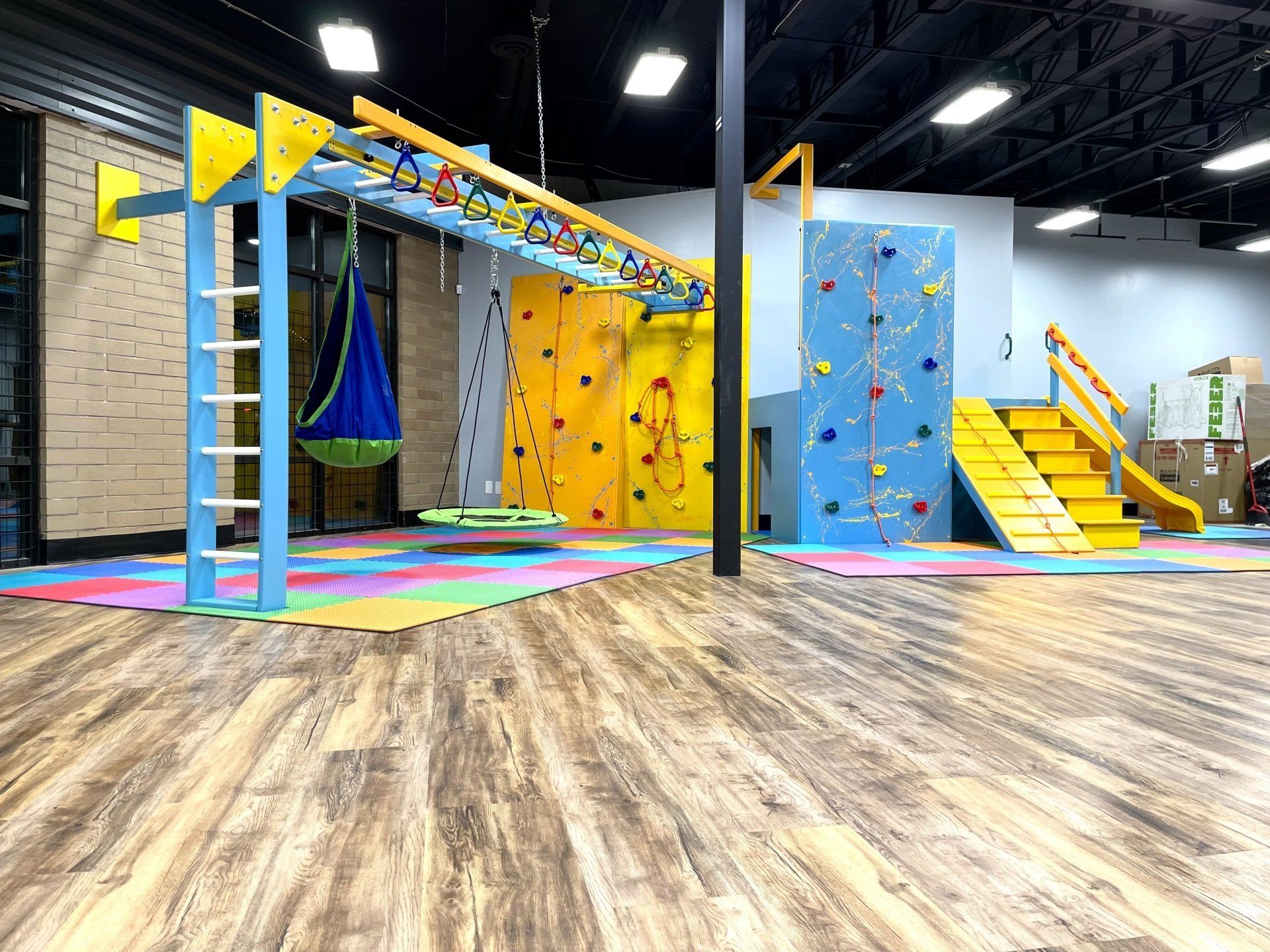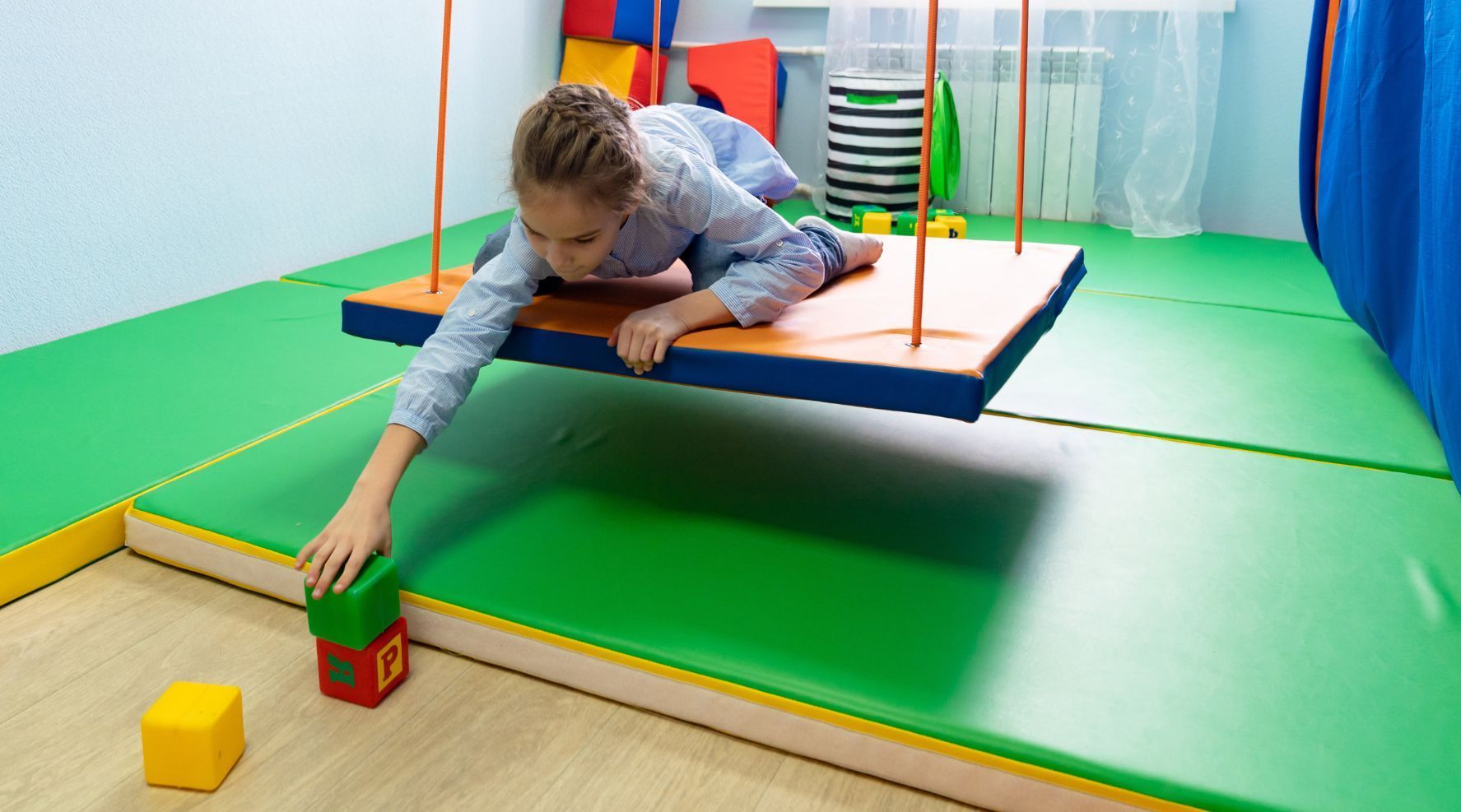

Quick answer: A sensory gym is a specially designed space where children and other users can explore movement, sensory input, play, and skill-building activities in a structured environment. Sensory gyms often include equipment such as swings, monkey bars, climbing walls, crash pits, play structures, and calming areas.
Sensory gyms are commonly found in occupational therapy clinics, schools, pediatric healthcare facilities, community organizations, and private homes. Unlike a standard playground or fitness center, a sensory gym is planned around how people experience movement, touch, balance, sound, and their surroundings.
The exact design can look very different from one space to another. A small sensory room may focus on a few versatile pieces of equipment, while a commercial sensory gym may include a large custom play structure, multiple climbing features, suspended equipment, and dedicated spaces for both active movement and quieter breaks.
What Is the Purpose of a Sensory Gym?
The purpose of a sensory gym is to create a safe, engaging space for movement and sensory experiences. Children can climb, swing, crawl, jump, push, pull, balance, and rest while therapists, educators, caregivers, or parents adapt activities to their individual needs and goals.
For some users, the gym provides active input and an appropriate place to move their bodies. For others, it offers opportunities to practice coordination, strength, balance, motor planning, confidence, or social interaction. Quiet or enclosed areas can also give users a place to pause when they need less input.
A sensory gym is not a one-size-fits-all treatment. The space and activities should be selected with the individual user, environment, professional guidance, and safety requirements in mind.
How Does a Sensory Gym Work?
Sensory gyms work by giving users access to different types of movement and sensory input within one purposefully designed space. The equipment can be used in many ways, allowing an activity to be made more active, more challenging, more calming, or more structured depending on the person using it.
Common types of sensory experiences in a gym may include:
- Movement and balance activities, such as swinging, climbing, rocking, spinning, or walking across uneven surfaces
- Heavy-work activities, such as pushing, pulling, hanging, crawling, or moving weighted objects
- Touch-based experiences using different textures, flooring, padding, foam, or tactile wall activities
- Visual and spatial challenges that encourage users to navigate structures, obstacles, routes, or changing heights
- Quiet or calming opportunities in enclosed spaces, under play structures, or away from the most active parts of the gym
In a therapy setting, an occupational therapist or another qualified professional may guide the session and choose activities based on specific goals. In a school, community space, or home, the gym may be used for supervised play, movement breaks, structured activities, or a combination of purposes.
Who Uses Sensory Gyms?
Sensory gyms are often designed for children, but the intended age range and users depend on the facility. They may be used by children who benefit from additional movement opportunities, structured sensory input, motor-skill practice, or an environment designed around different support needs.
Sensory gyms may serve users in settings such as:
- Occupational therapy and pediatric therapy clinics
- Schools, early learning centers, and special education programs
- Hospitals, healthcare organizations, and rehabilitation programs
- Autism and ABA support centers and other community-based organizations
- Indoor play facilities and inclusive recreation spaces
- Private homes and residential support environments
A diagnosis is not required for someone to enjoy movement, climbing, imaginative play, or a thoughtfully designed environment. However, when a sensory gym is being used for therapy or to address a specific need, activities should be guided by an appropriate professional.
Organizations planning spaces for multiple users can learn more about commercial sensory gyms for occupational therapy, schools, healthcare facilities, nonprofits, and community programs.
What Equipment Is Found in a Sensory Gym?
There is no universal equipment list for a sensory gym. The right pieces depend on the room, the users, the organization's goals, supervision, accessibility, and budget. A good design focuses on equipment that can support multiple activities instead of filling the room with disconnected items.
Royalty Sensory Gyms offers a range of sensory gym equipment and product options that can be incorporated into a larger coordinated design.
Monkey Bar and Overhead Systems
Sensory monkey bar systems can support hanging, climbing, upper-body movement, coordination, and a variety of suspended attachments. Because activities and attachments can change, an overhead system can become one of the most versatile parts of a sensory gym.
An overhead system can also help make use of vertical space while preserving more open floor area for movement and other activities.
Swings and Suspended Equipment
Different swings and suspended sensory equipment can provide movement in multiple directions.
The structure, attachment points, clearances, equipment ratings, and supervision requirements all need to be considered during design and use. Suspended equipment should be planned as part of the overall gym rather than added without considering the surrounding space.
Play Structures
Custom sensory gym play structures may combine crawl spaces or tunnels, stairs, ninja ramps, angled rock walls, vertical rock walls, ladders, angled ladders, and different types of slides.
The area beneath a structure can sometimes be designed as a quieter or more secluded space, helping a single feature support both active and lower-input uses.
Foam/Ball Pits and Padded Areas
Ball pits and crash pits create designated areas for jumping, landing, crawling, or moving through foam.
Their size and location should work with the surrounding equipment and the way the facility plans to supervise activities. Crash pits can also be incorporated alongside climbing features, overhead systems, or play structures as part of a larger movement path.
Rock Walls and Climbing Features
Sensory climbing walls, stairs, ladders, ninja ramps, and similar features can add challenge while making productive use of vertical space.
Routes and difficulty can be planned around the intended users, available fall zones, room layout, and facility goals.
Wall Activities and Calming Spaces
Wall-mounted sensory activities can offer hands-on interaction without taking up substantial floor space. They can be especially useful when a sensory gym needs to provide multiple activity options within a smaller room.
Calming or seclusion areas can provide a lower-activity option when a user needs a break from the main gym. Depending on the overall design, these areas may be incorporated beneath play structures or positioned away from higher-activity equipment.
What Are the Potential Benefits of a Sensory Gym?
A well-designed sensory gym can give children and other users more ways to move, play, explore, and participate. The specific benefits depend on the person, the activities, and how the space is used.
Depending on the setting and individual goals, a sensory gym may support:
- Gross motor skills, including climbing, jumping, crawling, and navigating obstacles
- Balance, coordination, body awareness, and motor planning
- Strength, endurance, grip, and upper-body movement
- Confidence, problem-solving, and willingness to try new activities
- Structured movement breaks and opportunities for active play
- Social interaction, turn-taking, and cooperative play
- Access to quieter spaces when a user needs less stimulation
These outcomes are not guaranteed, and a sensory gym should not be presented as a cure or replacement for professional care. Its value comes from giving users and professionals a flexible environment that can be adapted to different activities and needs.
Sensory Gym vs. Indoor Playground: What Is the Difference?
A sensory gym and an indoor playground may share features such as climbing structures, slides, monkey bars, and padded surfaces. The main difference is the intent behind the design.
An indoor playground is generally built around recreation and open play. A sensory gym is planned around a broader range of movement and sensory experiences, often with input from therapists, educators, healthcare professionals, or facility leaders.
Equipment placement, activity options, calming spaces, attachment points, accessibility, traffic flow, visibility, and supervision may all be considered as part of the sensory gym design.
Some sensory gyms still feel playful and exciting. They do not need to look clinical. The strongest designs combine fun with purposeful use so children want to engage with the space.
Home Sensory Gyms vs. Commercial Sensory Gyms
A home sensory gym is usually designed for a smaller number of known users and must work within the available space in a house, basement, garage, or dedicated room.
It may include a compact overhead system, wall activities, a small climbing feature, mats, or portable equipment.
A commercial sensory gym is built for an organization such as a clinic, school, hospital, childcare center, ABA center, nonprofit, or community program.
These spaces may serve more users, require greater durability, include larger custom structures, and need to account for staff workflows, accessibility, traffic flow, cleaning, supervision, and professional installation.
Both types should be designed around the actual room and intended users. Copying a generic equipment list without considering structure, clearances, anchoring, and how activities will be supervised can create expensive problems later.
How Is a Sensory Gym Designed?
Designing a sensory gym starts with understanding who will use the space and what the organization wants the gym to accomplish.
The room dimensions matter, but square footage alone does not determine the best layout. Ceiling height, doors, windows, columns, vents, lighting, outlets, and other permanent obstructions can all affect the design.
A sensory gym planning process should consider:
- The ages, sizes, abilities, and anticipated number of users
- The facility's therapy, education, recreation, or community goals
- The size of the space, ceiling height, doors, windows, columns, and outlets
- Accessibility, entry points, traffic flow, visibility, and supervision
- Cleaning, maintenance, and long-term durability
- Budget, installation, shipping, future expansion, and financing needs
Planning the entire space before purchasing equipment can prevent overcrowding and help the major features work together. It can also reduce the chance of paying for repeated travel and installation when a project is completed in disconnected phases.
Royalty Sensory Gyms follows a consultation, design, manufacturing, and installation process that considers the room, intended users, selected equipment, operating space, and project priorities before the completed gym is installed.
How Much Does a Sensory Gym Cost?
Sensory gym pricing varies because every room and equipment package is different. As a general reference, a typical professionally installed commercial sensory gym from Royalty Sensory Gyms costs approximately $14,000 to $16,000. Smaller local projects or shipped equipment packages may cost less than $10,000, while large custom gyms can cost $25,000 or more.
The largest variables are usually the amount and complexity of the equipment, along with travel and installation. A custom quote and design provide a much more useful number than pricing individual equipment without considering the room or project location.
For a detailed breakdown of budgets, equipment, installation, shipping, financing, and grants, read How Much Does a Commercial Sensory Gym Cost?
Frequently Asked Questions About Sensory Gyms
Is a sensory gym only for children with autism?
No. Sensory gyms may be used by children with autism and by many other users. They can support therapy, education, recreation, movement, and inclusive play. The design and activities should reflect the specific people and organization using the space.
Do sensory gyms have to be used by an occupational therapist?
Not always. Sensory gyms can be used in homes, schools, clinics, healthcare facilities, community programs, and other supervised settings.
However, therapy activities and recommendations for a specific child should come from a qualified professional, and all equipment should be used with appropriate supervision.
Can a sensory gym fit in a small room?
Yes. A smaller room can still become a useful sensory gym when the design prioritizes versatile equipment and uses wall and overhead space carefully.
The room's structure, ceiling height, clearances, and intended activities will determine what is realistic.
Is a sensory gym the same as a sensory room?
The terms are sometimes used interchangeably, but a sensory gym usually places greater emphasis on physical movement and larger equipment.
A sensory room may focus more heavily on lighting, sound, tactile experiences, or calming activities. A single space can include elements of both.
What equipment is usually included in a sensory gym?
Sensory gyms may include swings, monkey bars, climbing walls, play structures, ball pits or crash pits, slides, trampolines, wall activities, padded flooring, suspended equipment, and quieter areas.
There is no universal equipment package. The best combination depends on the room, intended users, goals, available space, and budget.
Can an existing room be converted into a sensory gym?
Often, yes. The room should be evaluated for dimensions, ceiling height, wall construction, anchoring options, flooring, access, visibility, permanent obstructions, and safety clearances before equipment is selected.
Are sensory gyms only used in therapy clinics?
No. Sensory gyms can be designed for occupational therapy clinics, ABA centers, schools, hospitals and healthcare facilities, nonprofits, community organizations, inclusive recreation spaces, childcare environments, and private homes.
Commercial environments typically require additional consideration for durability, accessibility, staff workflows, supervision, cleaning, traffic flow, and the number of people expected to use the space.
Create a Sensory Gym Designed for Your Space
A sensory gym should do more than hold equipment. It should create a connected environment where movement, play, skill-building, and quieter experiences can work together.
That starts with a design based on the people using the gym, the goals of the organization, and the realities of the room.
Royalty Sensory Gyms designs, builds, delivers, and installs custom sensory gyms for organizations and families nationwide. Each project can be planned around your available space, intended users, preferred equipment, program goals, and budget.
Request a free sensory gym design and quote to explore what is possible for your space.